


Page 59 - HSP Annual Report 2022
P. 59
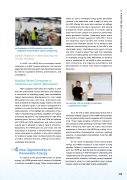
 ▲ Guidance on GHG reduction: an on-site inspection of illumination and air-conditioning
Carbon Reduction in Manufacturing and Circular Economy
In 2022, the HSPB also encouraged tenant companies to install F-gases destruction and removal equipment and introduce green manufacturing processes by means of guidance delivery, presentations, and consultations.
Mobilize Tenant Companies to Introduce Low-Carbon Manufacture
HSP companies have taken the initiative to chart their own path toward net-zero emissions and introduce a mechanism for evaluating supply chain sustainability. Taiwan Semiconductor Manufacturing Co., Ltd., United Microelectronics Corp., AUO Corp., and Innolux Corp. have all rallied their respective supply chains to set down carbon reduction goals. Low-carbon management is ushered in to pave the way for a green supply chain for semiconductors. In the highlight are introduction of low- carbon manufacturing processes, installation of F-gases processing equipment, and replacement of high-GHG potential gases. As such, C2F6 and C3F8 are replaced with C3F8 and C4F8 respectively, and carbon neutral natural gas is adopted to reduce carbon emissions. Separately, the HSPB plans to join forces with the Association of Industries in Science Parks and major tenant companies to establish a zero-carbon platform for rallying all supply chain members behind the cause of carbon reduction and thus creating a zero-carbon, sustainable science park.
4 New Opportunities in Renewable Energy
In support of the government push for green energy, the HSPB persists with a number of initiatives to promote renewable energy. These include making it
easier for type-3 renewable energy power generation ventures to be spared the need to apply for entry into the HSP, offering floor area ratio incentives to buildings for installing photovoltaic equipment, and asking prospective tenant companies to consider setting aside half of their usable roof space for photovoltaic power generation facilities. Separately, major power users (with a contract capacity of 5,000 kW or more) are required to source at least 10% of their contract capacity from renewable sources. To be allowed to take advanced manufacturing processes to the HSP’s new (expanded) space, chipmakers must secure not less than 20% of electric power they need from renewable sources and subsequently work toward full conversion to renewable energy by 2050. Meanwhile, an advisory team is established for the HSPB to offer consultation, host conferences, and organize presentations and demonstrations to induce more tenant companies to follow suit.
▲ Learning from an energy conservation outperformer in 2022
As of the end of 2022, photovoltaic devices with a combined installed capacity of 45.49 MW had found their way into plants built by tenant companies and onto public roofs. These made possible a 28,947-ton reduction in CO2 emissions while generating more than 56.87 million kWh of electricity each year. To induce more tenant companies to follow suit, the HSPB also hosted 13 on- site photovoltaics demonstrations, seminars, matching sessions, or presentations that attracted more than 680 attendees in 2022.
As the world increasingly moves toward green energy, the HSPB considers it a vital mission to help upgrade Taiwan’s competitiveness on this front. As such, the HSPB will help develop the renewable energy industry by drawing on HSP strengths in chipmaking and collaborating with the optoelectronics, information, and communications industries. Ultimately vertical integration promises to usher in a next-generation green energy industry cluster and help attain energy sustainability.
             57
  5 A New Net-Zero Era for Sustainability


